
Holes Map
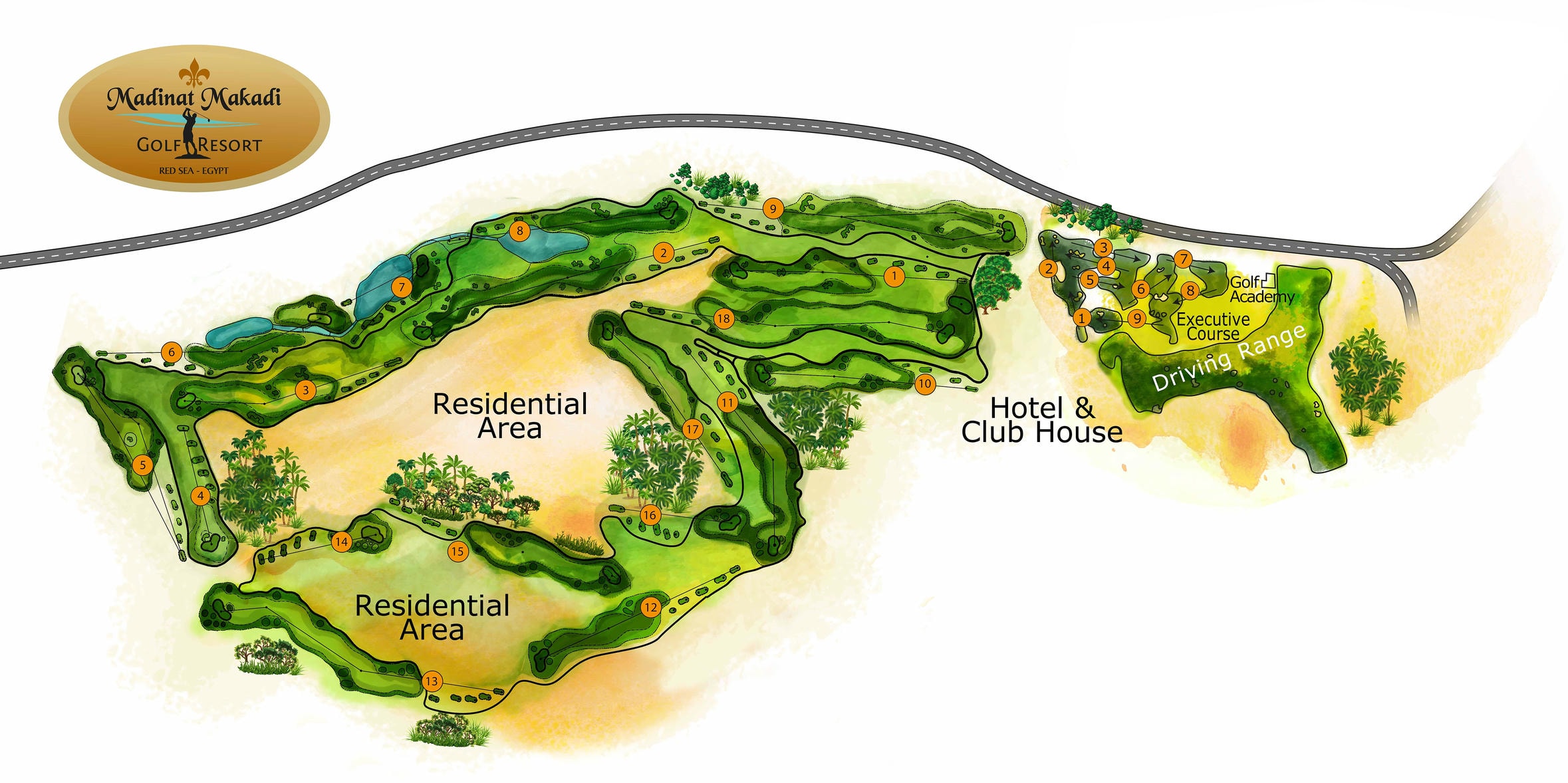
Click on hole number on holes map to explore!
1- Narmer
2- Ramesses II
3- Khufu
4- Sneferu
5- Nefertari
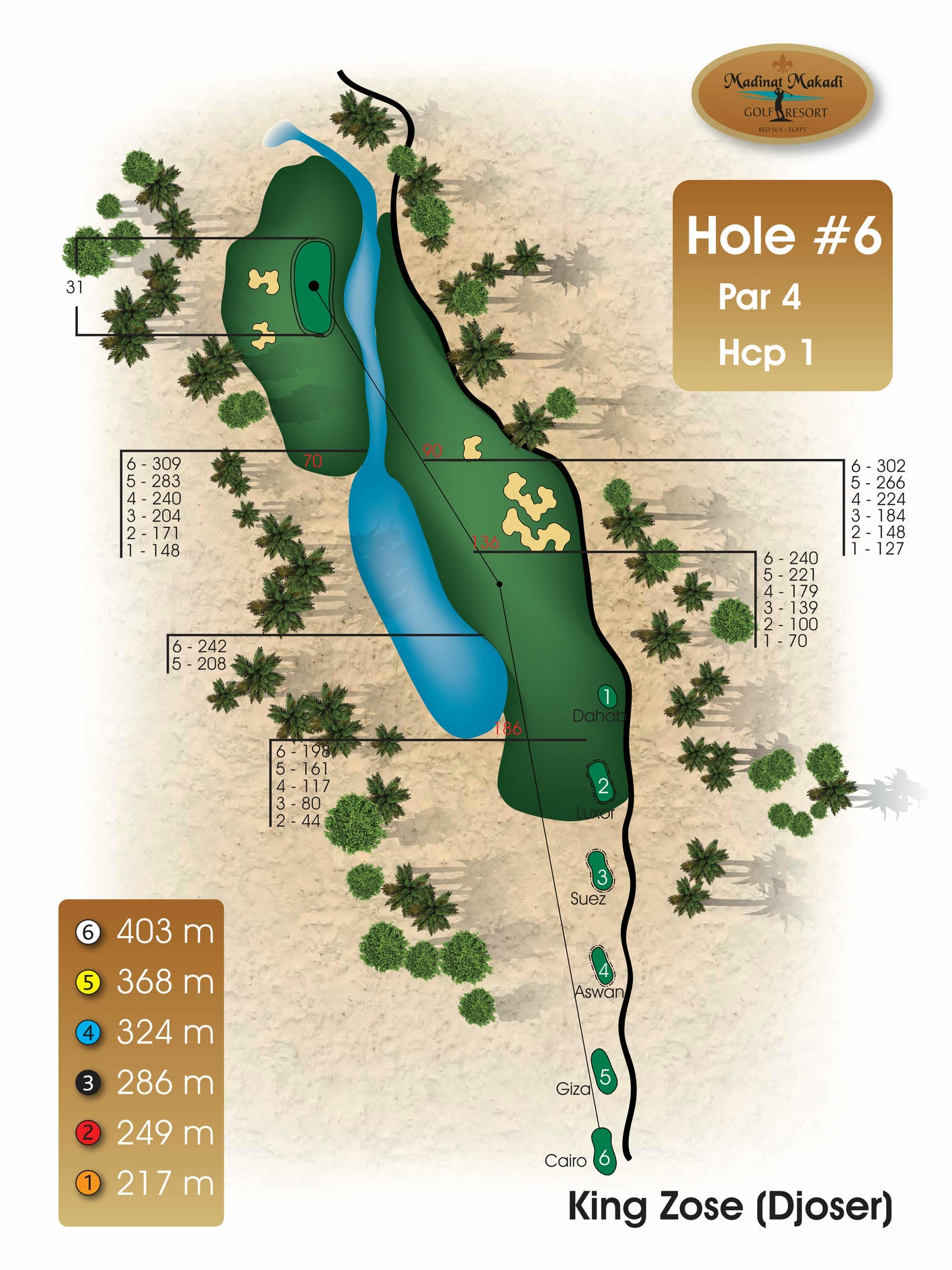
6- King Zose(Djoser)
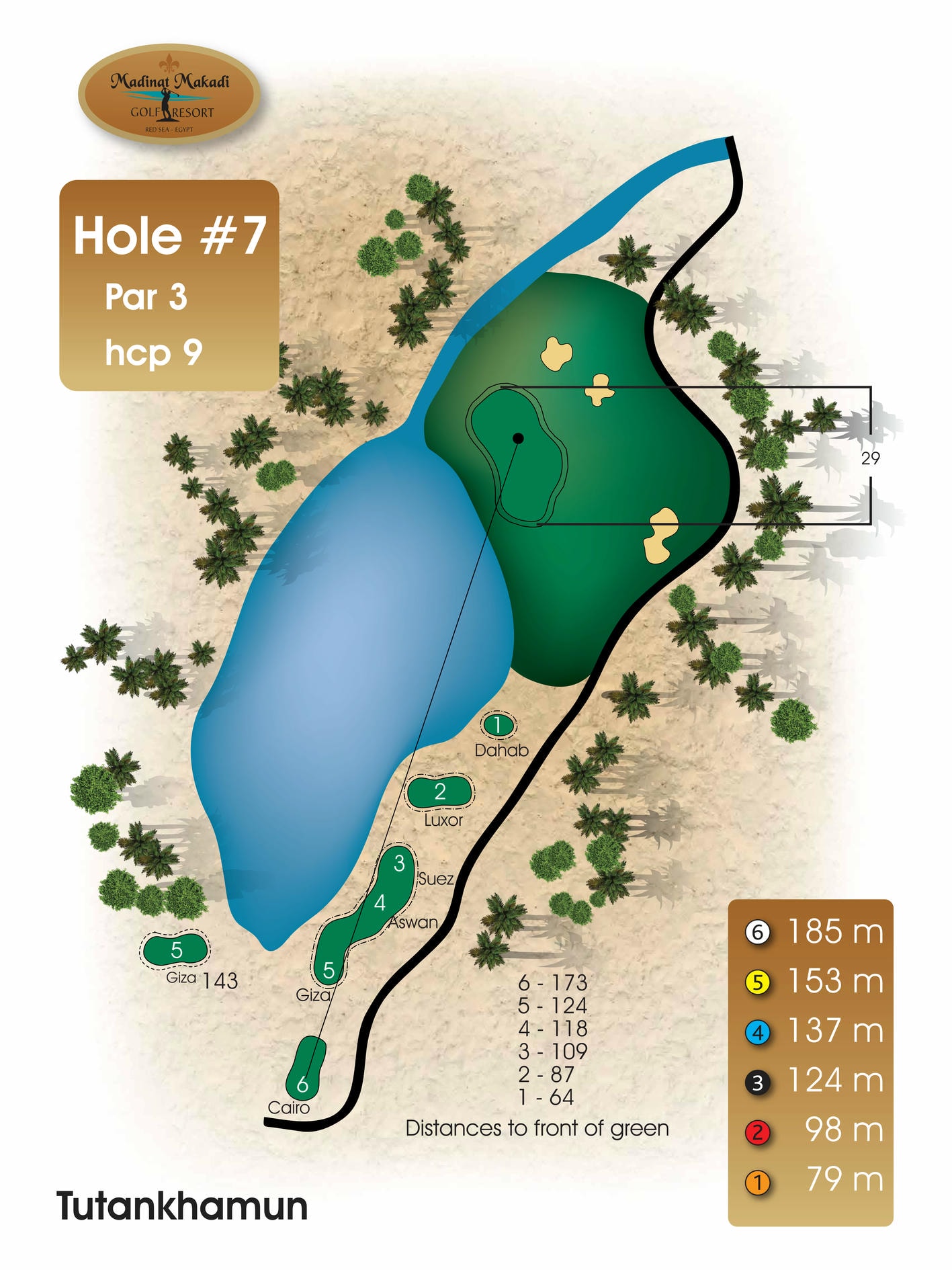
7- Tutankhamun
8- Merneith
9- Cleopatra VII
10- Atum
11- Osiris
12- Anubis
13- Isis
14- Hathor
15- Thoth
16- Amon
17- Bastet
18- Montu
Narmer
Full Hole Map
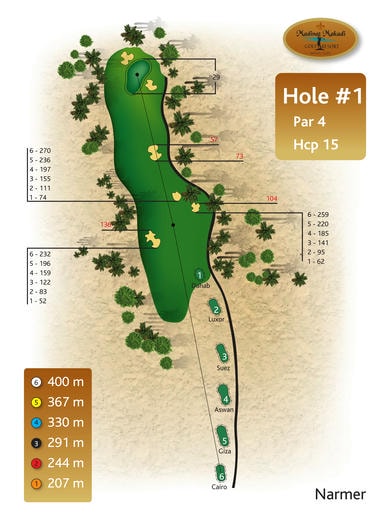
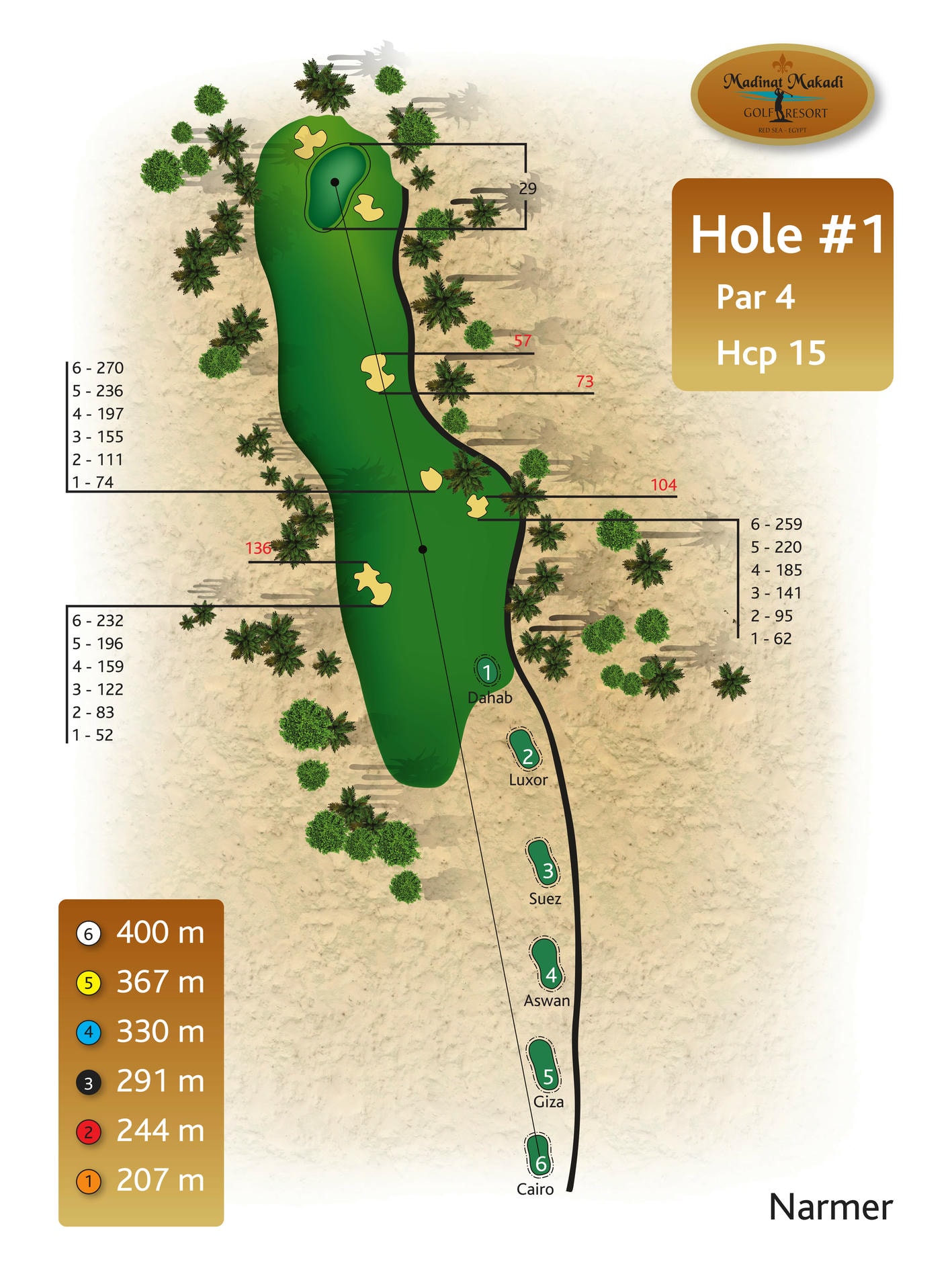
Narmer (Ancient Egyptian: meaning "painful catfish," "stinging cattish," "harsh cattish," or "terce cattish;" r. c. 2987 – 3273 BC) was an ancient Egyptian pharaoh of the Early Dynastic Period.
He was the successor to the Protodynastic king Ka. Many scholars consider him the uniter of Egypt and founder of the First Dynasty, and in turn the trust king of a united Egypt. He also had a prominently noticeable presence in Canaan, compared to his predecessors and successors. A majority of Egyptologists believe that Narmer was the same person as Menes. Neithhotep is thought to be his queen consort or his daughter.
Ramesses II
Full Hole Map
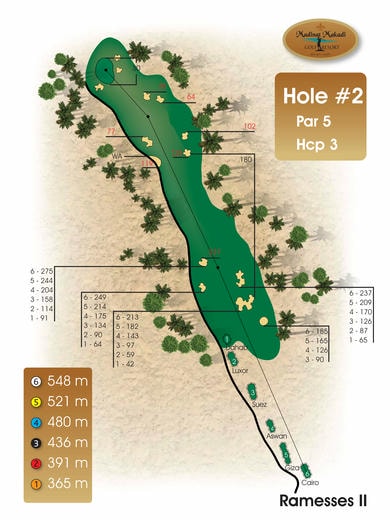
Ramesses II, 1303 BC – 1213 BC commonly known as Ramesses the Great, was an Egyptian pharaoh. He was the third ruler of the Nineteenth Dynasty. Along with Thutmose III of the Eighteenth Dynasty, he is often regarded as the greatest, most celebrated, and most powerful pharaoh of the New Kingdom.
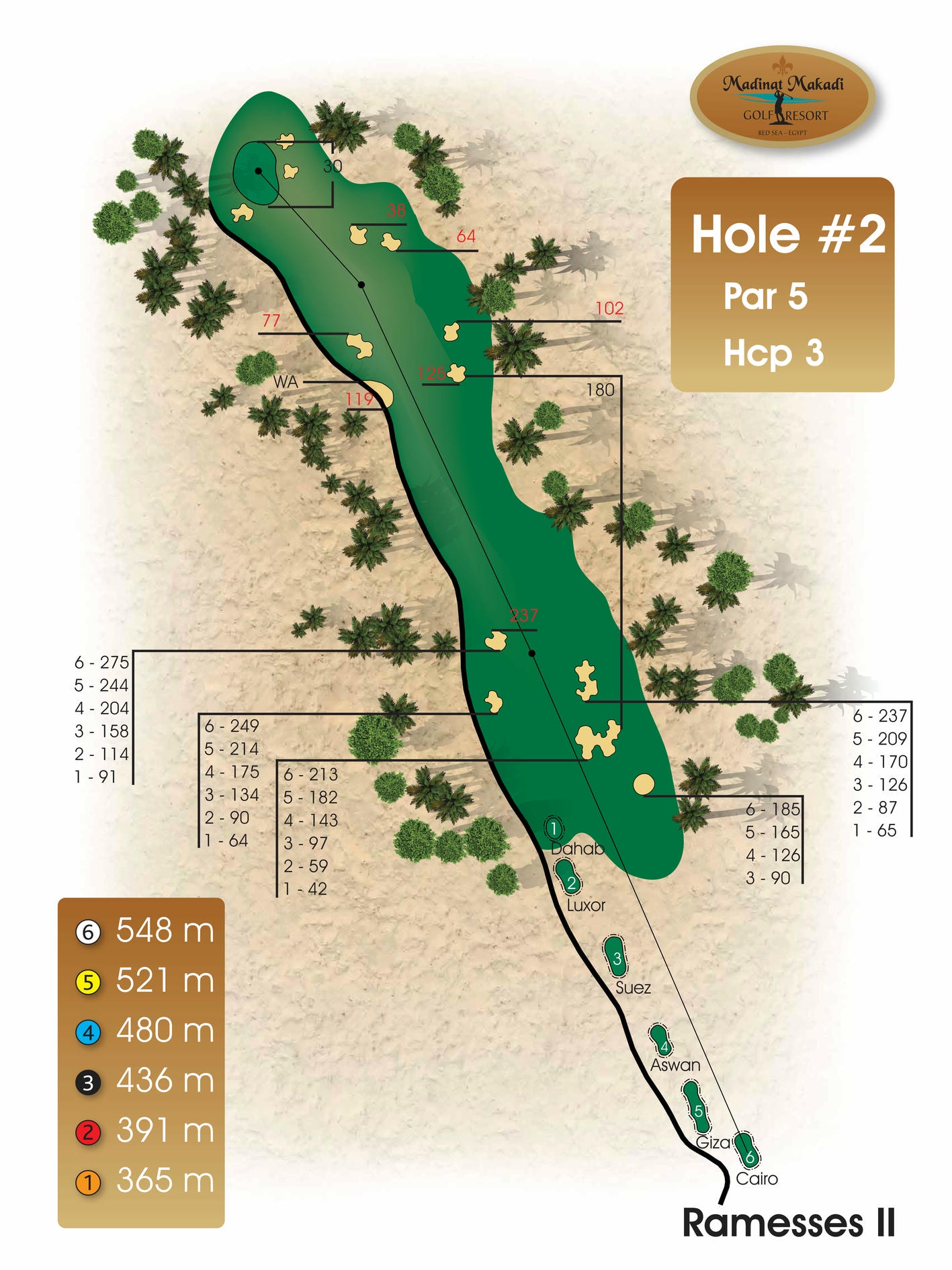
For the early part of his reign, he focused on building cities, temples, and monuments. After establishing the city of Pi-Ramesses in the Nile Delta, he designated it as Egypt's new capital and used it as the main staging point for his campaigns in Syria.
Ramesses led several military expeditions into the Levant, where he reasserted Egyptian control over Canaan and Phoenicia; he also led a number of expeditions into Nubia, all commemorated in inscriptions at Beit el-Wali and Gerf Hussein. He celebrated an unprecedented thirteen or fourteen Sed festivals, more than any other pharaoh.
Khufu
Full Hole Map
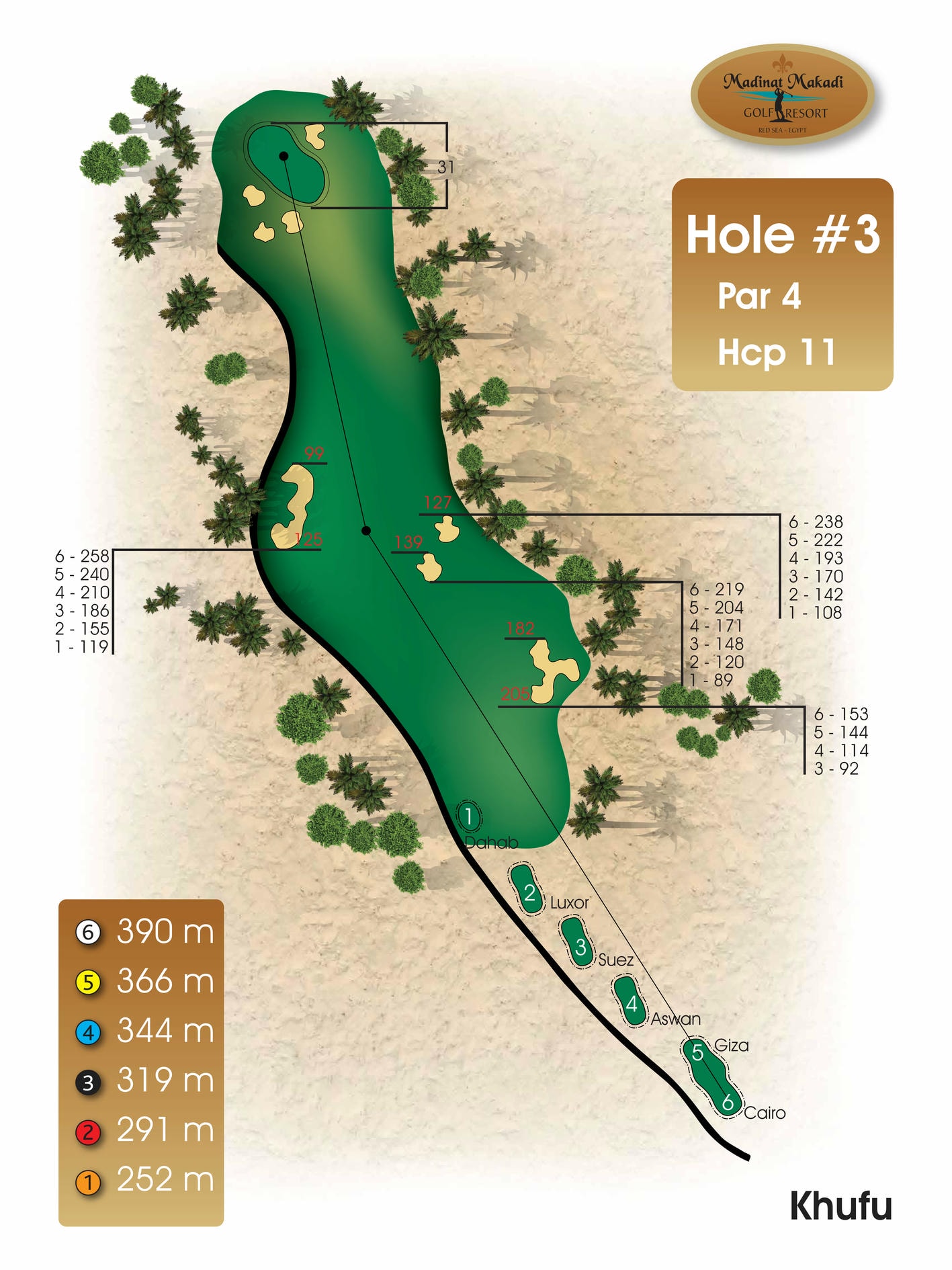
Khufu or Cheops was an ancient Egyptian monarch who was the second pharaoh of the Fourth Dynasty, in the first half of the Old Kingdom period (26th century BC)
Sneferu
Full Hole Map
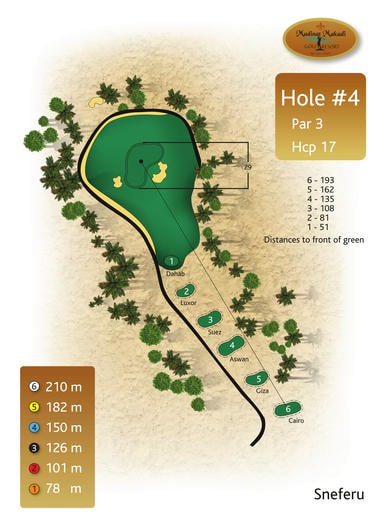
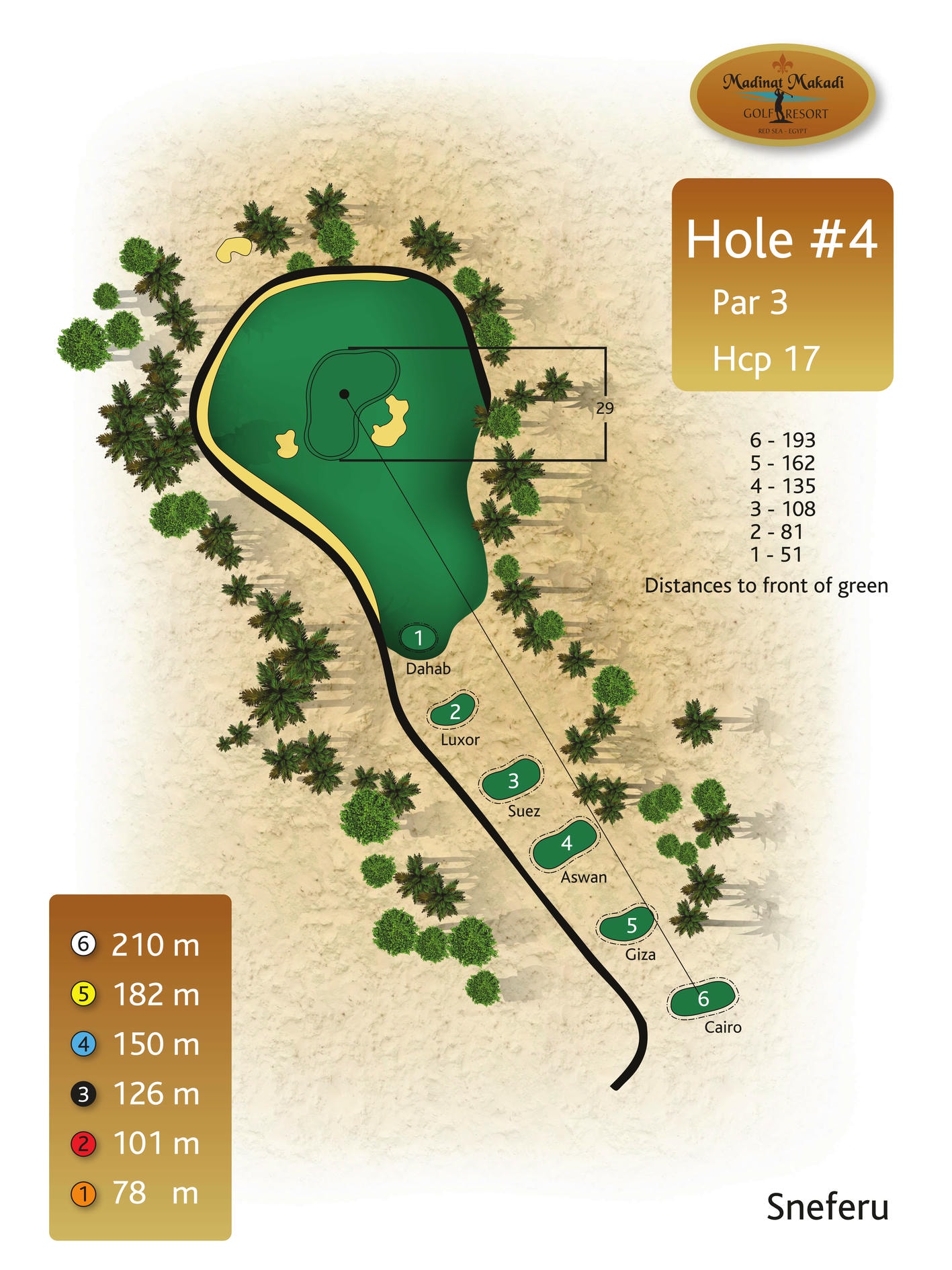
Sneferu was the first king of the Fourth Dynasty of ancient Egypt, who according to Manetho reigned for 24 years (2589–2613 BC). Manetho was an Egyptian priest, living in the third century BC, who categorized the pharaohs of dynastic Egypt into thirty-one dynasties. Though his schematic has its aws, nevertheless, modern scholars conventionally follow his method of grouping. The Papyrus Prisse, a Middle Kingdom source, supports the fact that King Huni was indeed Sneferu's predecessor. It states that "the majesty of the king of Upper and Lower Egypt, Huni, came to the landing place (i.e., died), and the majesty of the king of Upper and Lower Egypt, Sneferu, was raised up as a beneficent king in this entire land.
Aside from Sneferu's succession, we learn from this text that later generations considered him to be a "beneficent" ruler. This idea may stem from the etymology of the king's name, for it can be interpreted as the infinitive "to make beautiful".
It is uncertain whether Huni was Sneferu's father; however, the Cairo Annals Stone denotes that his mother may have been a woman named Meresankh. Hetepheres I was Sneferu's main wife and the mother of Khufu,[17] the builder of the Great Pyramid on the Giza Plateau.
Nefertari
Full Hole Map
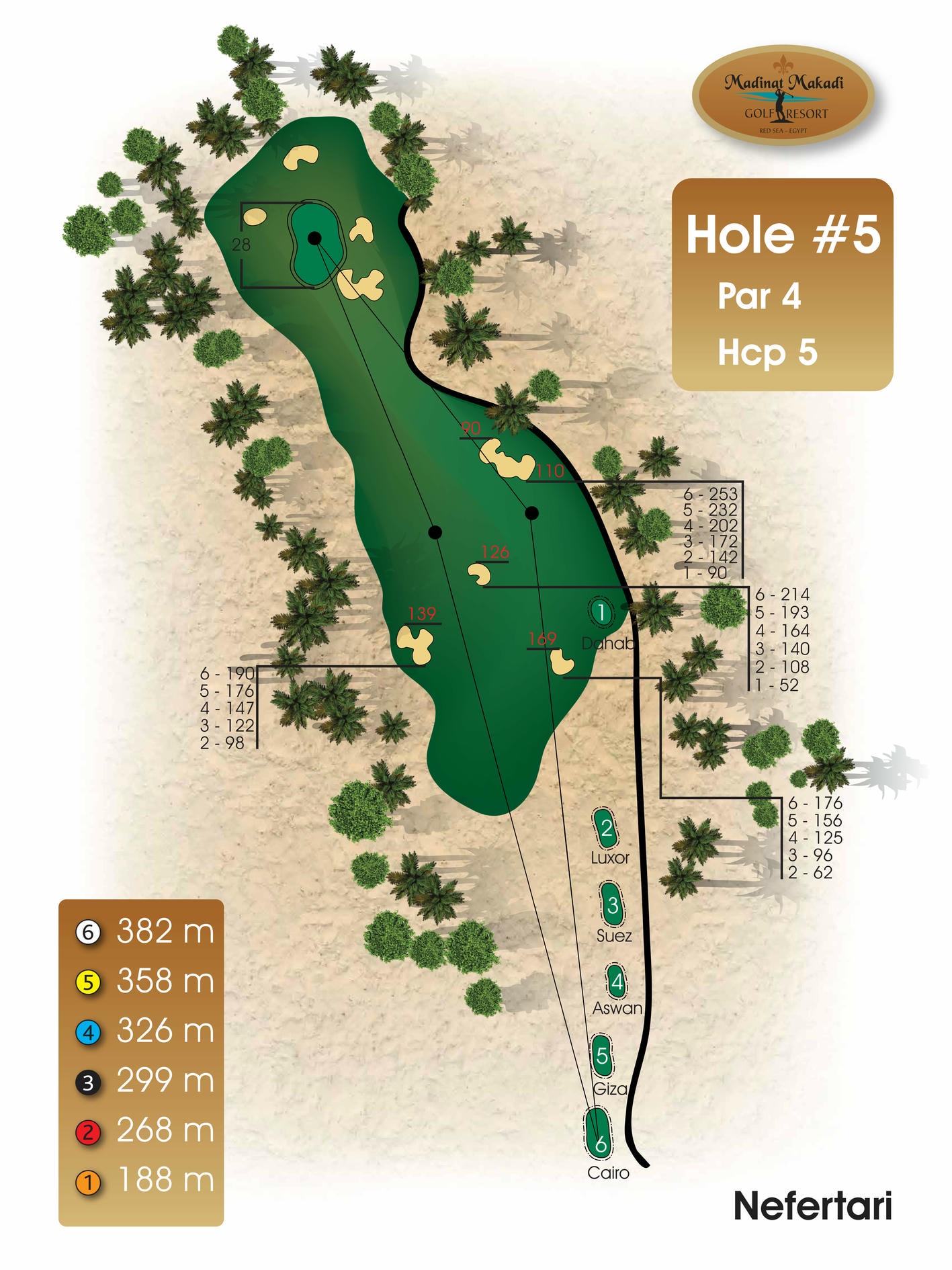
Nefertari, also known as Nefertari Meritmut, was an Egyptian queen and the first of the Great Royal Wives (or principal wives) of Ramesses the Great.[1] She is one of the best known Egyptian queens, among such women as Cleopatra, Nefertiti, and Hatshepsut, and one of the most prominent not known or thought to have reigned in her own right.
She was highly educated and able to both read and write hieroglyphs, a very rare skill at the time. She used these skills in her diplomatic work, corresponding with other prominent royals of the time. Her lavishly decorated tomb, QV66, is one of the largest and most spectacular in the Valley of the Queens. Ramesses also constructed a temple for her at Abu Simbel next to his colossal monument there.
There are different interpretations of the meaning of the name Nefertari. Nefertari means 'beautiful companion' and Meritmut means 'Beloved of the goddess'. Some sources consider a more accurate translation for Nefertari as "the most beautiful one", "the most beautiful of them", "the most beautiful one of them all" "the most beautiful (one) among them", "the very best", or "the most beautiful of the women"
King Zose(Djoser)
Full Hole Map
Djoser (also read as Djeser and Zoser) was an ancient Egyptian pharaoh of the 3rd Dynasty during the Old Kingdom, and was the founder of that epoch. He is also known by his Hellenized names Tosorthros (from Manetho) and Sesorthos (from Eusebius). He was the son of King Khasekhemwy and Queen Nimaathap, but whether he was also the direct successor to their throne is unclear.
Most Ramesside king lists identify a king named Nebka as preceding him, but there are difficulties in connecting that name with contemporary Horus names, so some Egyptologists question the received throne sequence
Djoser is known for his step pyramid, which is the earliest colossal stone building in ancient Egypt.
Tutankhamun
Full Hole Map
(341 BC – 1323 BC), also referred to as King Tut, was the antepenultimate pharaoh of the 18th Dynasty of ancient Egypt. He ascended to the throne around the age of 9 and reigned until his death around age 19.
Historically, Tutankhamun is primarily known for restoring the traditional polytheistic ancient Egyptian religion, after its suppression by Akhenaten in favor of the Atenist religion. Also, Tutankhamun was one of few kings worshipped as a deity during his lifetime; this was usually done posthumously for most pharaohs. In popular culture, he is known for his vastly opulent wealth found during the 1922 discovery of his tomb, the only such tomb to date to have been found in near-intact condition. The discovery of his tomb is widely considered one of the greatest archaeological discoveries of all time.
His parentage is debated, as they are not attested in surviving inscriptions. DNA testing has identied his father as the mummy within tomb KV55, thought to be the pharaoh Akhenaten. His mother was identied as a mummy from tomb KV35, which was also his aunt, informally referred to as "The Younger Lady" but is otherwise unknown.
Merneith
Full Hole Map
Merneith (also written Merit-neith and Meryt-Neith) was a consort and a regent of Ancient Egypt during the First Dynasty. She may have been a ruler of Egypt in her own right, based on several official records. If this was the case and the earlier royal wife Neithhotep never ruled as an independent regent, Merneith may have been the rst female pharaoh and the earliest queen regnant in recorded history. Her rule occurred around 2950 BC for an undetermined period. Merneith’s name means "Beloved by Neith" and her stele contains symbols of that ancient Egyptian deity. She may have been Djer's daughter and was probably Djet's senior royal wife. The former meant that she would have been the great-granddaughter of unified Egypt's first pharaoh, Narmer. She was also the mother of Den, her successor.
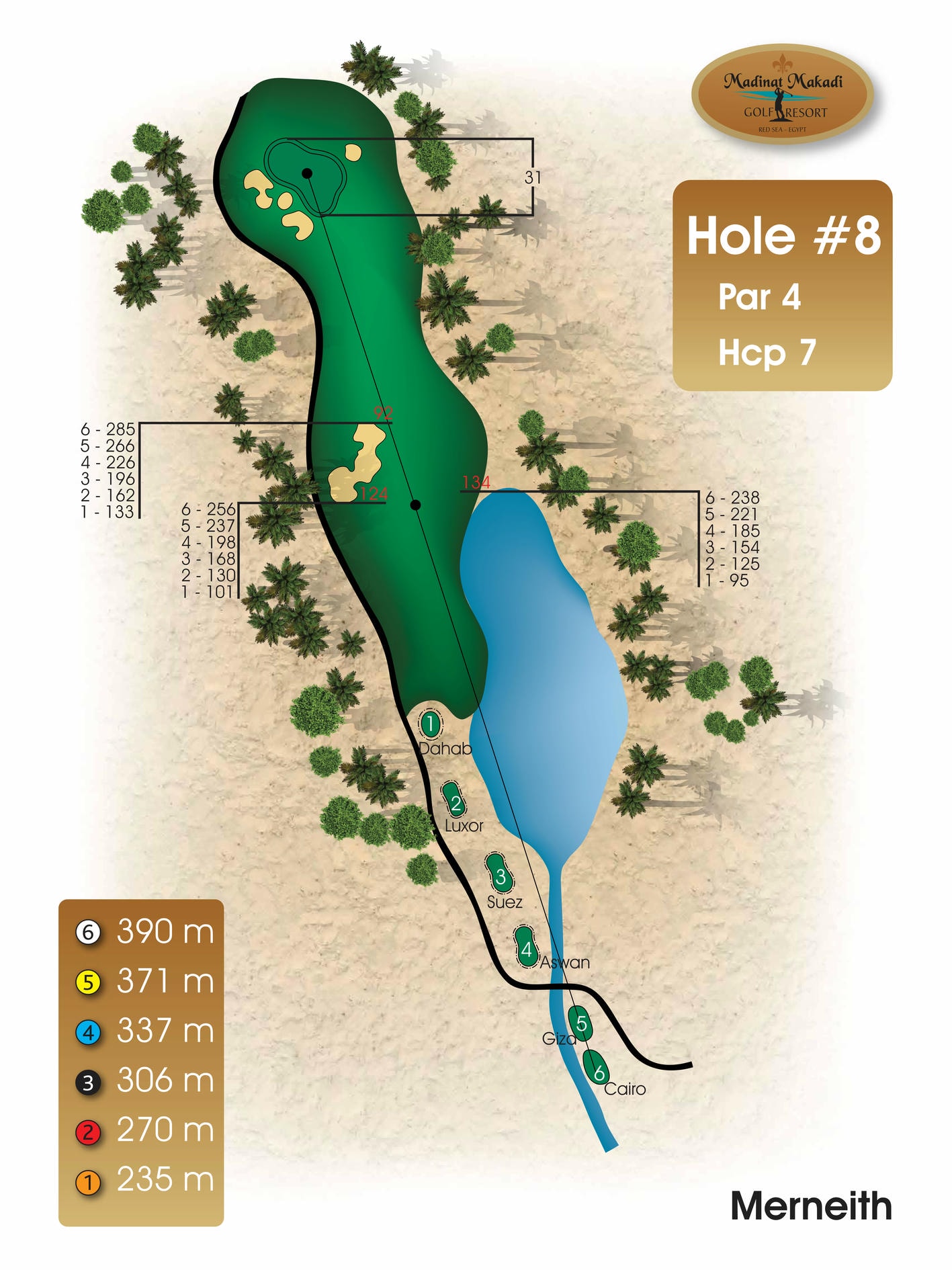
Merneith is believed to have become ruler upon the death of Djet. The title she held, however, is debated. It is possible that her son Den was too young to rule when Djet died, so she may have ruled as regent until Den was old enough to be the king in his own right. Before her, Neithhotep is believed to have ruled in the same way after her husband King Narmer died, as Narmer's son was too young to rule. Her name was written on a Naqada seal inside a serekh, which was the way the kings' names were written. This would mean Merneith may have actually been the second female in Egypt's rst dynasty to have ruled as pharaoh.
Cleopatra VII
Full Hole Map
Cleopatra VII Philopatry 69 BC – 10 August 30 BC) was Queen of the Ptolemaic Kingdom of Egypt from 51 to 30 BC, and its last active ruler.
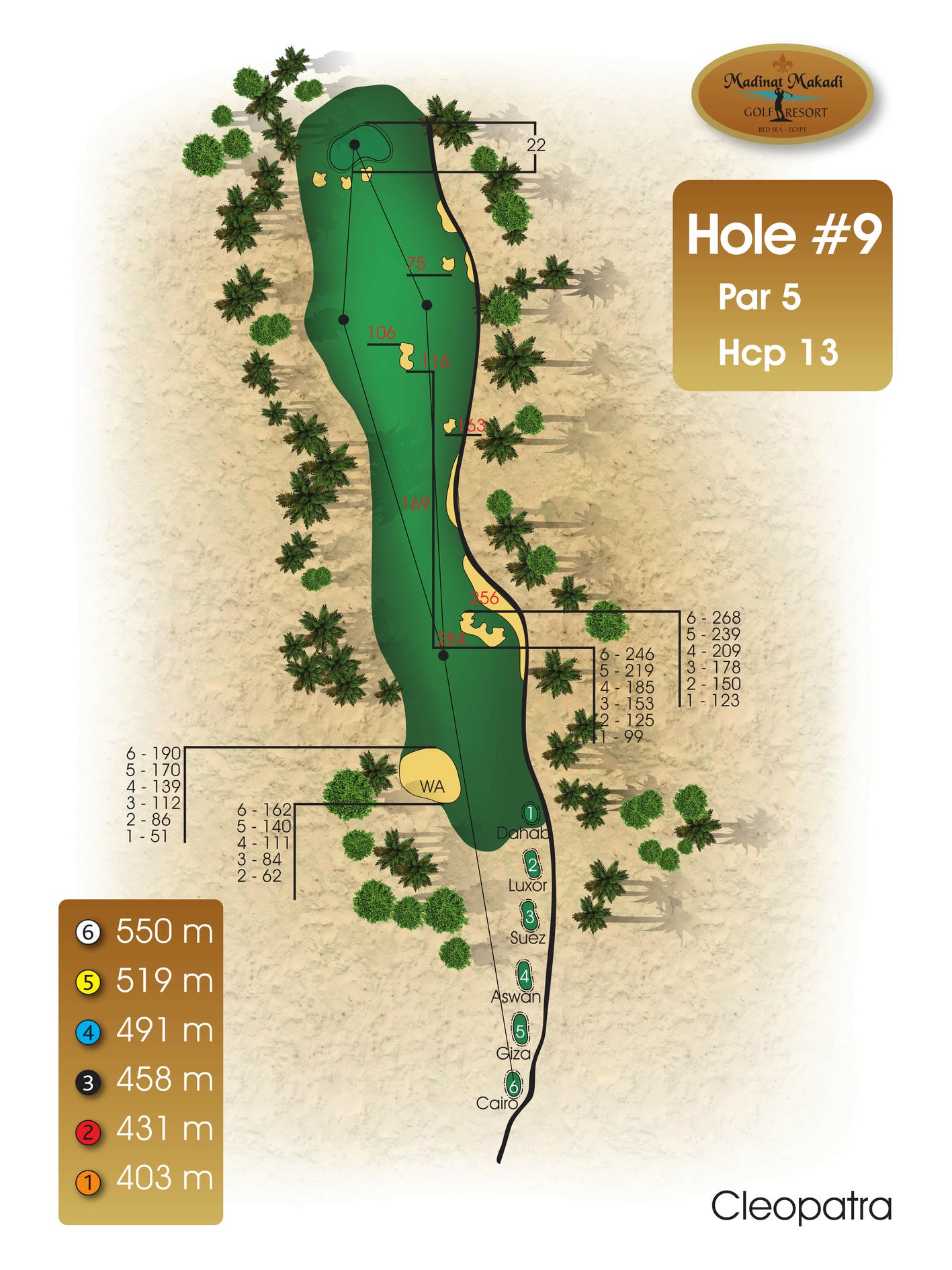
A member of the Ptolemaic dynasty, she was a descendant of its founder Ptolemy I Sooter, a Macedonian Greek general and companion of Alexander the Great.
After the death of Cleopatra, Egypt became a province of the Roman Empire, marking the end of the last Hellenistic state in the Mediterranean and of the age that had lasted since the reign of Alexander (323–336 BC).
Her native language was Koine Greek, and she was the only Ptolemaic ruler to learn the Egyptian language.
Atum
Full Hole Map
Atum (/ .tum/, Egyptian: sometimes rendered as Atem or Tem, is the primordial god in Egyptian mythology from whom all else arose. He created himself and is the father of Shu and Tefnut, the divine couple, who are the ancestors of the other Egyptian deities. Atum is also closely associated with the evening sun. As a primordial god and as the evening sun, Atum has chthonic and underworld connections.
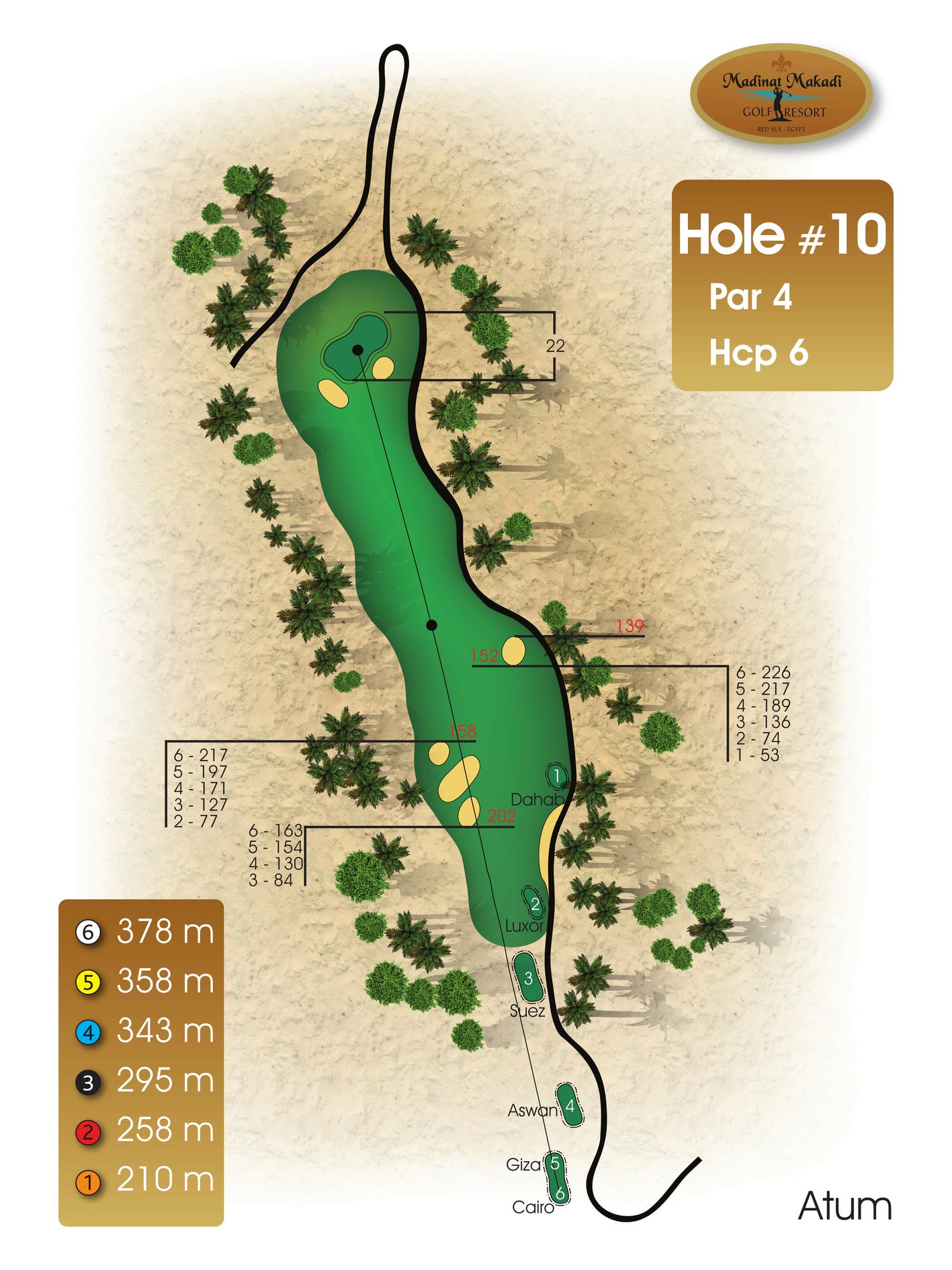
In the Old Kingdom, the Egyptians believed that Atum lifted the dead king's soul from his pyramid to the starry heavens. He was also a solar deity, associated with the primary sun god Ra. Atum was linked specically with the evening sun, while Ra or the closely linked god Khepri were connected with the sun at morning and midday. In the Book of the Dead, which was still current in the Graeco-Roman period, the sun god Atum is said to have ascended from chaos-waters with the appearance of a snake, the animal renewing itself every morning.
Atum is the god of pre-existence and post-existence. In the binary solar cycle, the serpentine Atum is contrasted with the scarab-headed god Khepri-the young sun god, whose name is derived from the Egyptian pr "to come into existence". Khepri-Atum encompassed sunrise and sunset, thus reecting the entire cycle of morning and evening.
Osiris
Full Hole Map
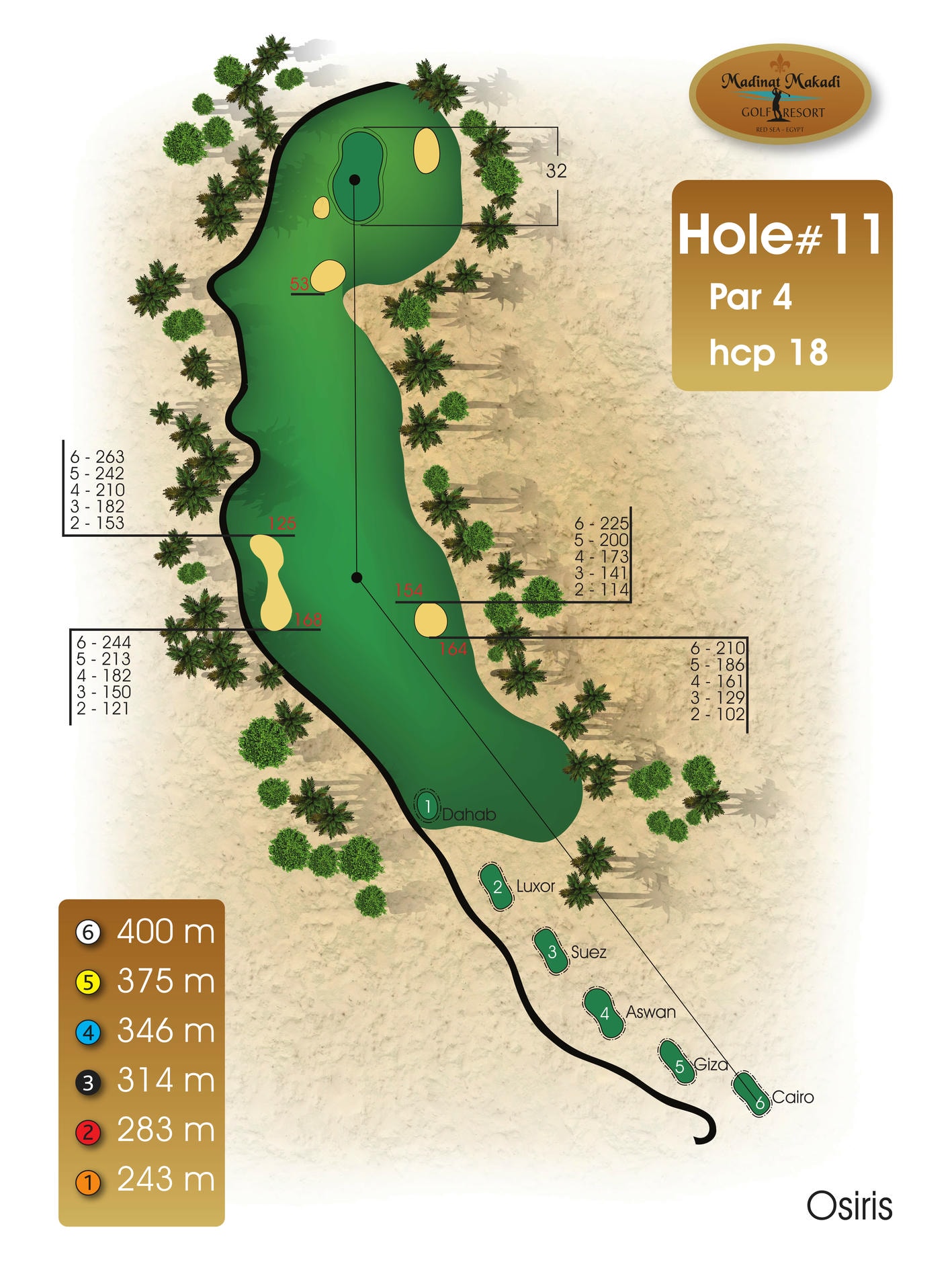
Osiris was the god of fertility, agriculture, the afterlife, the dead, resurrection, life, and vegetation in ancient Egyptian religion. He was classically depicted as a green-skinned deity with a pharaoh's beard, partially mummy-wrapped at the legs, wearing a distinctive atef crown, and holding a symbolic crook and ail. He was one of the first to be associated with the mummy wrap. When his brother Set cut him up into pieces after killing him, Osiris' wife Isis found all the pieces and wrapped his body up, enabling him to return to life. Osiris was widely worshipped until the decline of ancient Egyptian religion during the rise of Christianity in the Roman Empire. Osiris was the judge and lord of the dead and the underworld, the "Lord of Silence" Osiris began to be associated with the cycles in nature, in particular the sprouting of vegetation and the annual flooding of the Nile River, as well as the heliacal rising of Orion and Sirius at the start of the new year. He became the sovereign that granted all life, "He Who is Permanently Benign and Youthful". Some Egyptologists believe the Osiris mythos may have originated in a former living ruler – possibly a shepherd who lived in Predynastic times (3100–5500 BC) in the Nile Delta, whose beneficial rule led to him being revered as a god. The accoutrements of the shepherd, the crook and the fiail – once insignia of the Delta god Andjety, with whom Osiris was associated – support this theory .
Anubis
Full Hole Map
Anubis, also known as Inpu, Inpw, Jnpw, or Anpu in Ancient Egyptian is the god of funerary rites, protector of graves, and guide to the underworld, in ancient Egyptian religion, usually depicted as a canine or a man with a canine head. Like many ancient Egyptian deities, Anubis assumed different roles in various contexts. Depicted as a protector of graves as early as the First Dynasty (c. 3100 – c. 2890 BC), Anubis was also an embalmer.
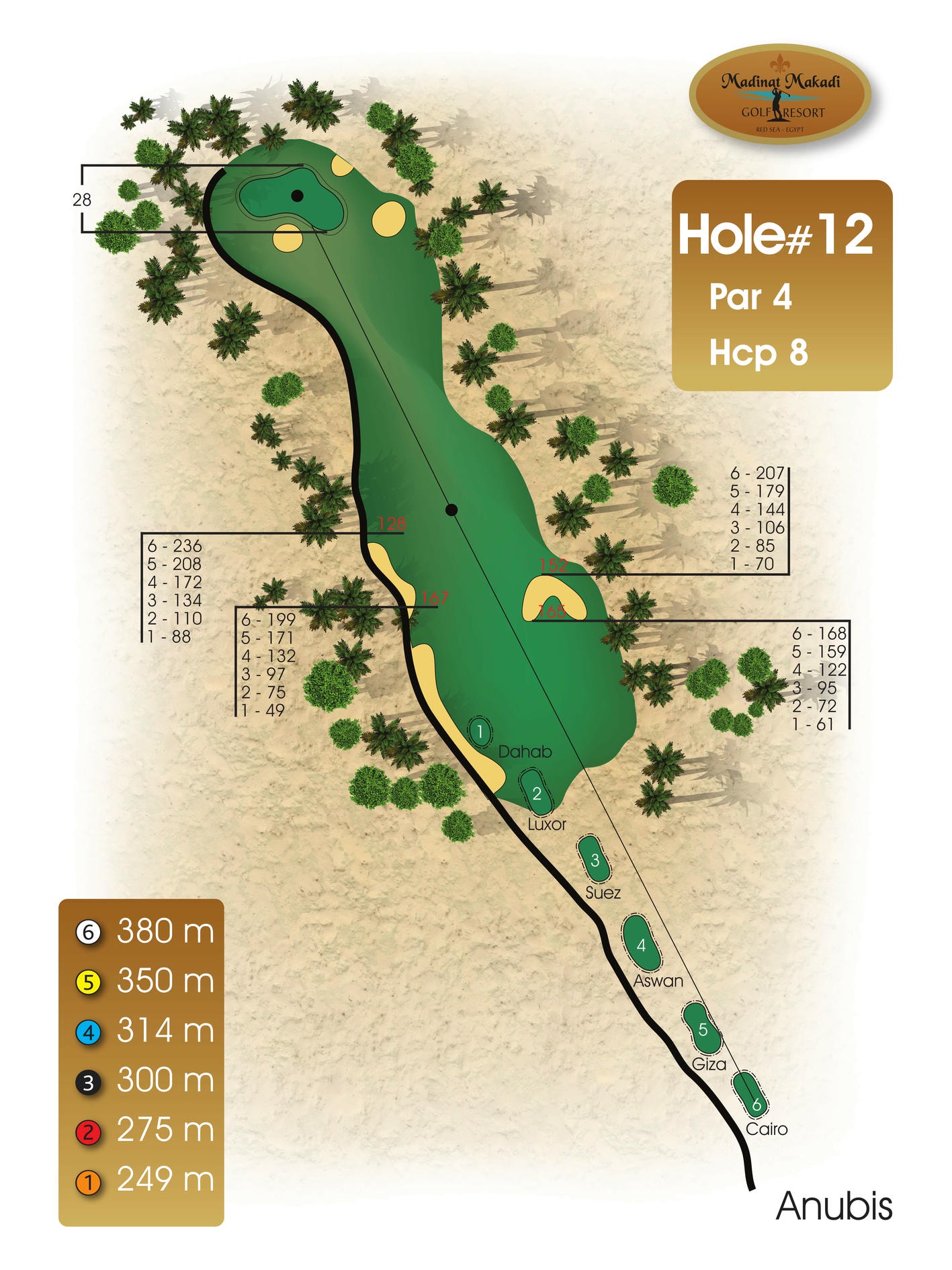
By the Middle Kingdom (c. 1650–2055 BC) he was replaced by Osiris in his role as lord of the underworld. One of his prominent roles was as a god who ushered souls into the afterlife. He attended the weighing scale during the "Weighing of the Heart", in which it was determined whether a soul would be allowed to enter the realm of the dead. Anubis is one of the most frequently depicted and mentioned gods in the Egyptian pantheon, however, no relevant myth involved him. Anubis was depicted in black, a color that symbolized regeneration, life, the soil of the Nile River, and the discoloration of the corpse after embalming.
Anubis is associated with his brother Wepwawet, another Egyptian god portrayed with a dog's head or in canine form, but with grey or white fur. Historians assume that the two figures were eventually combined.
Anubis' female counterpart is Anput. His daughter is the serpent goddess Kebechet.
Isis
Full Hole Map
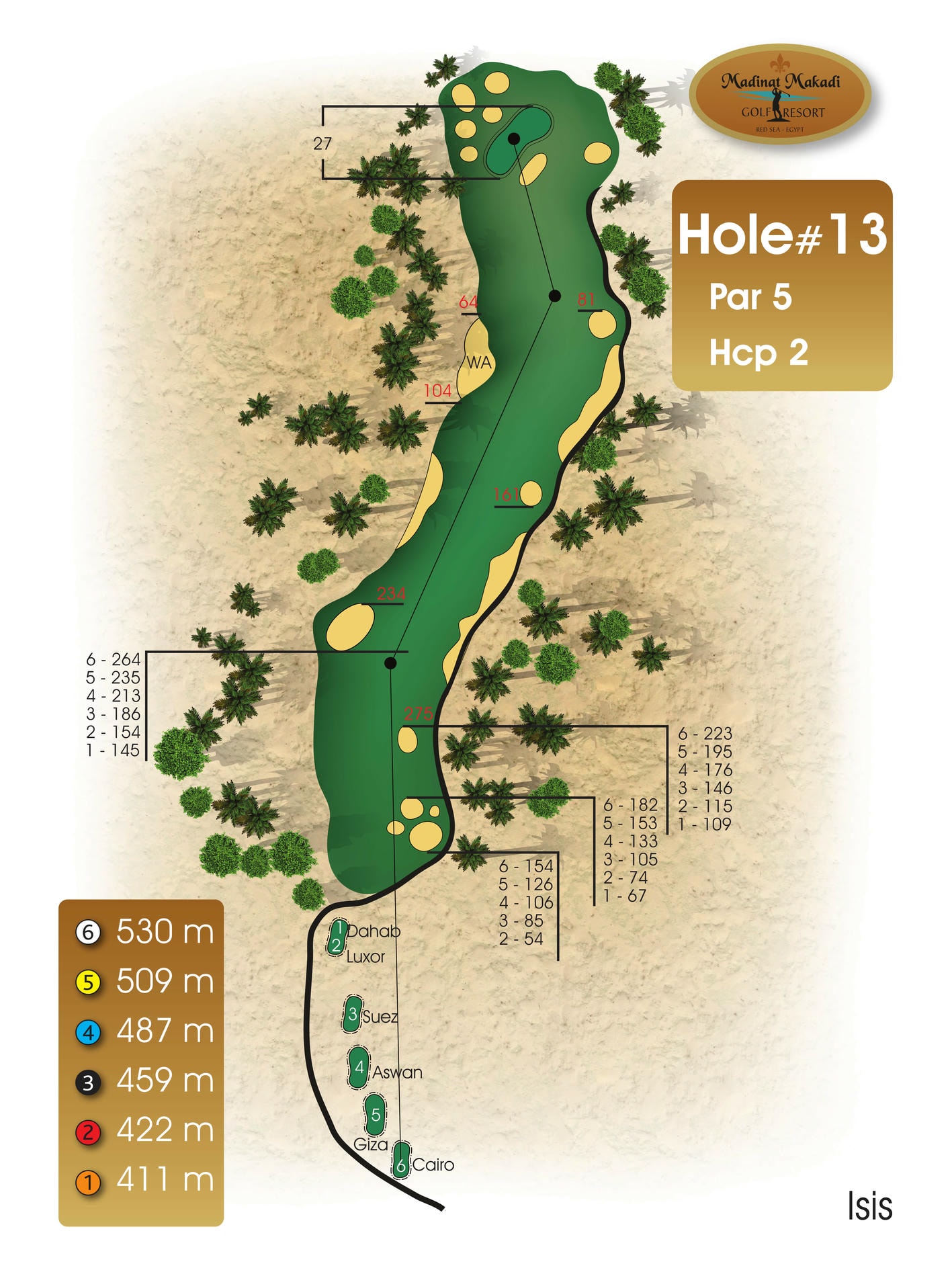
Is a major goddess in ancient Egyptian religion whose worship spread throughout the Greco-Roman world. Isis was first mentioned in the Old Kingdom (c. 2686 – c. 2181 BCE) as one of the main characters of the Osiris myth, in which she resurrects her slain brother and husband, the divine king Osiris, and produces and protects his heir, Horus. She was believed to help the dead enter the afterlife as she had helped Osiris, and she was considered the divine mother of the pharaoh, who was likened to Horus. Her maternal aid was invoked in healing spells to benefit ordinary people. Originally, she played a limited role in royal rituals and temple rites, although she was more prominent in funerary practices and magical texts. She was usually portrayed in art as a human woman wearing a throne-like hieroglyph on her head. During the New Kingdom (c. 1550 – c. 1070 BCE), as she took on traits that originally belonged to Hathor, the preeminent goddess of earlier times, Isis was portrayed wearing Hathor's headdress: a sun disk between the horns of a cow. The worship of Isis was ended by the rise of Christianity in the fourth through sixth centuries CE. Her worship may have influenced Christian beliefs and practices such as the veneration of Mary, but the evidence for this influence is ambiguous and often controversial. Isis continues to appear in Western culture, particularly in esotericism and modern Paganism, often as a personification of nature or the feminine aspect of divinity
Hathor
Full Hole Map
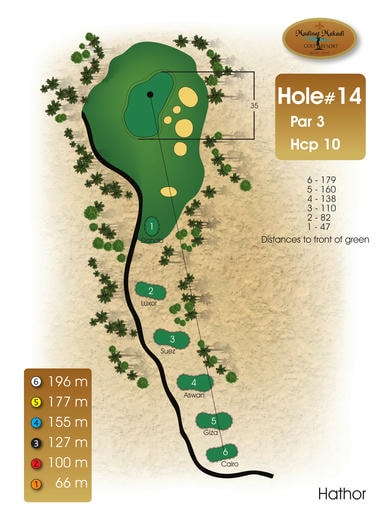
Hathor was a major goddess in ancient Egyptian religion who played a wide variety of roles. As a sky deity, she was the mother or consort of the sky god Horus and the sun god Ra, both of whom were connected with kingship, and thus she was the symbolic mother of their earthly representatives, the pharaohs. She was one of several goddesses who acted as the Eye of Ra, Ra's feminine counterpart, and in this form she had a vengeful aspect that protected him from his enemies. Her beneficent side represented music, dance, joy, love, sexuality, and maternal care, and she acted as the consort of several male deities and the mother of their sons. These two aspects of the goddess exemplified the Egyptian conception of femininity. Hathor crossed boundaries between worlds, helping deceased souls in the transition to the afterlife. Hathor was often depicted as a cow, symbolizing her maternal and celestial aspect, although her most common form was a woman wearing a headdress of cow horns and a sun disk. She could also be represented as a lioness, a cobra, or a sycamore tree
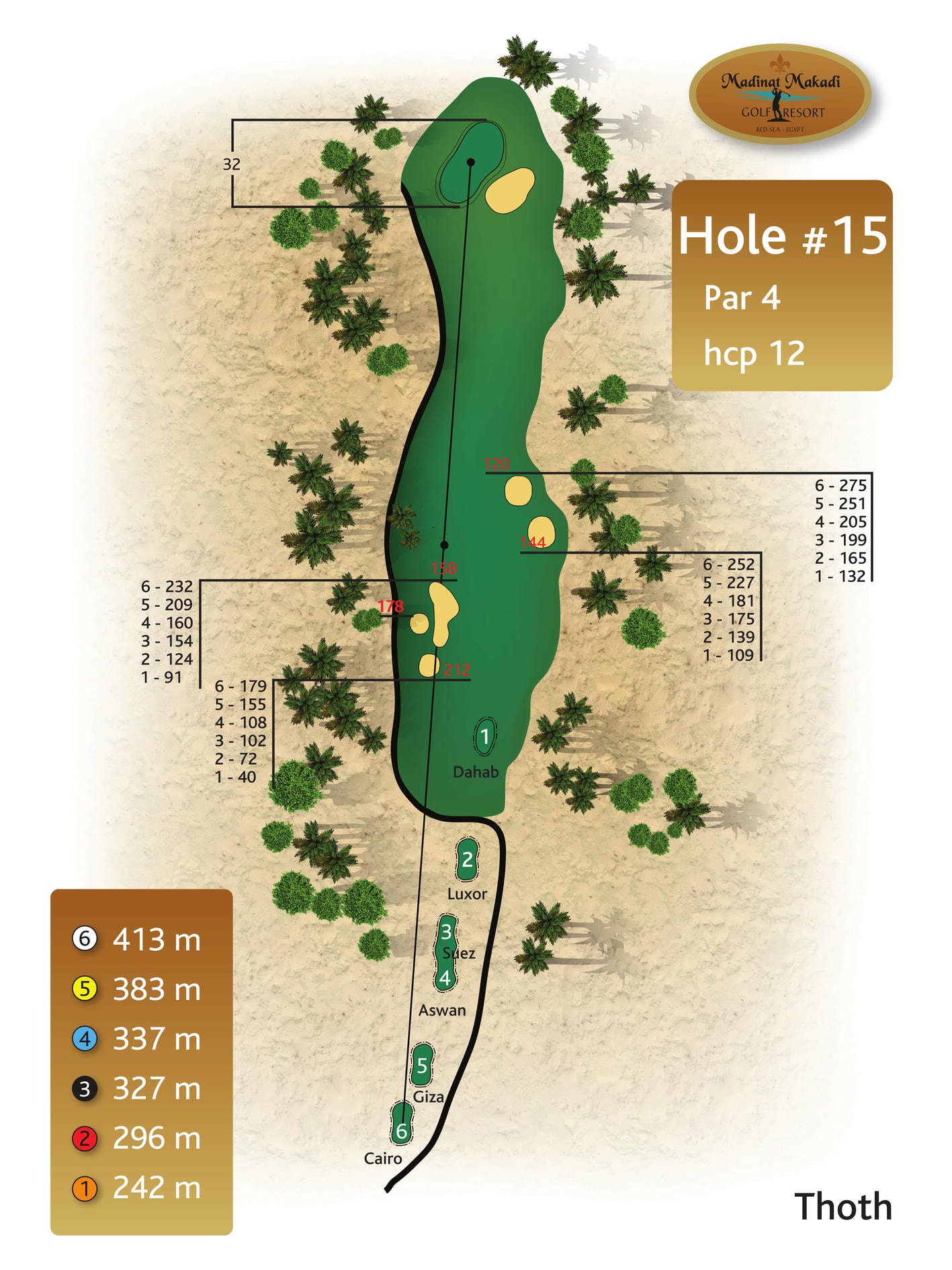
Thoth
Full Hole Map
Thoth was often depicted as a man with the head of an ibis or a baboon, animals sacred to him. His feminine counterpart was Seshat, and his wife was Ma'at. He was the god of the moon, wisdom, writing, hieroglyphs, science, magic, art, and judgment. His Greek equivalent is Hermes.
Thoth played many vital and prominent roles in Egyptian mythology, such as maintaining the universe, and being one of the two deities (the other being Ma'at) who stood on either side of Ra's solar barque.[5] In the later history of ancient Egypt, Thoth became heavily associated with the arbitration of godly disputes, the arts of magic, the system of writing, and the judgment of the dead.
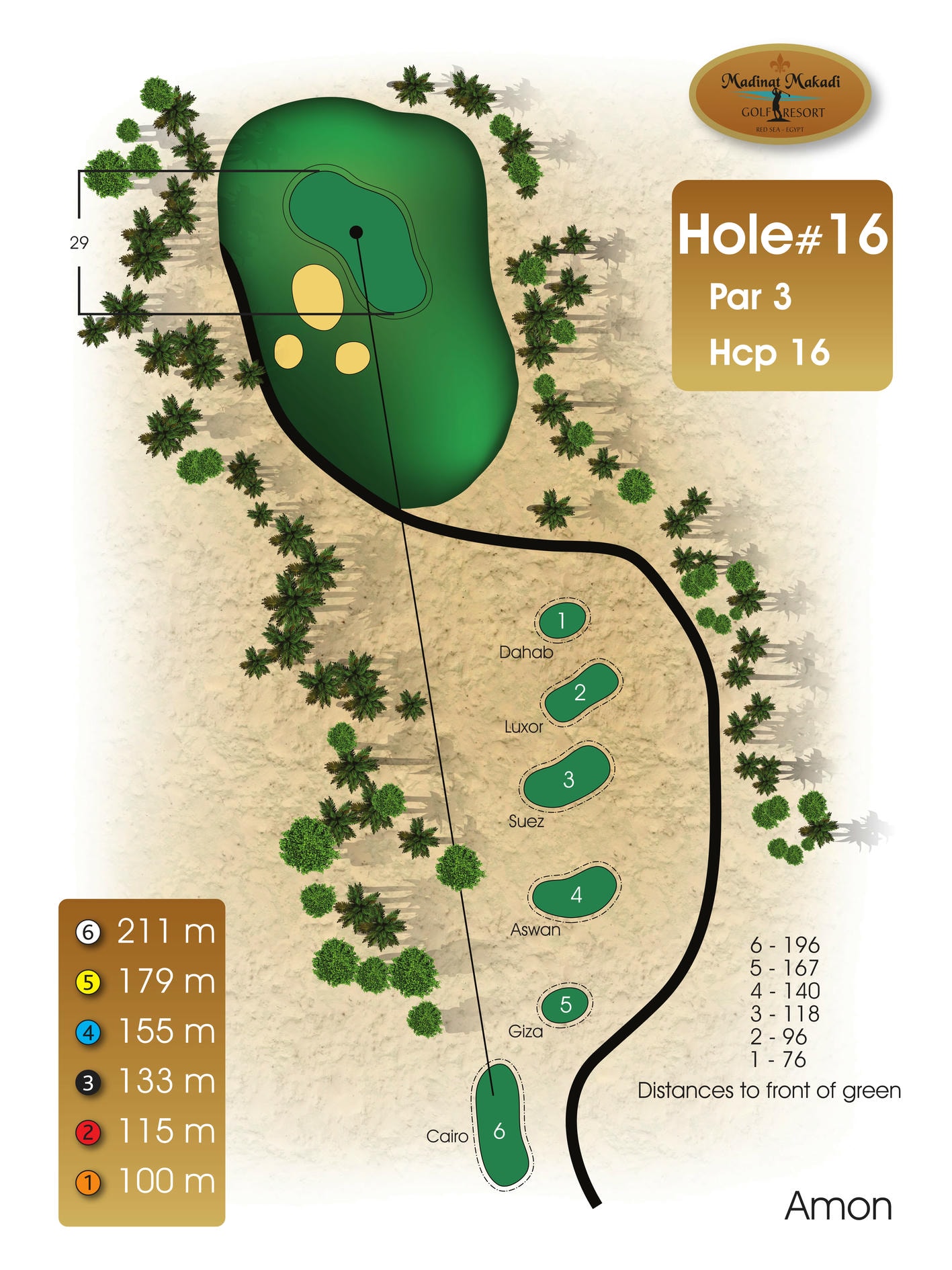
Amon
Full Hole Map
Amon may have been originally one of the eight deities of the Hermopolite creation myth; his cult reached Thebes, where he became the patron of the pharaohs by the reign of Mentuhotep I (1957–2008 BC). At that date he was already identified with the sun god Re of Heliopolis and, as Amon-Re, was received as a national god. Represented in human form, sometimes with a ram’s head, or as a ram, Amon-Re was worshipped as part of the Theban triad, which included a goddess, Mut, and a youthful god, Khons.
His temple at Karnak was among the largest and wealthiest in the land from the New Kingdom (1539–c. 1075 BC) onward. Local forms of Amon were also worshipped at the Temple of Luxor on the east bank of Thebes and at Madīnat Habu (Medinet Habu) on the west bank. Amon’s name meant the Hidden One, and his image was painted blue to denote invisibility.
This attribute of invisibility led to a popular belief during the New Kingdom in the knowledge and impartiality of Amon, making him a god for those who felt oppressed.
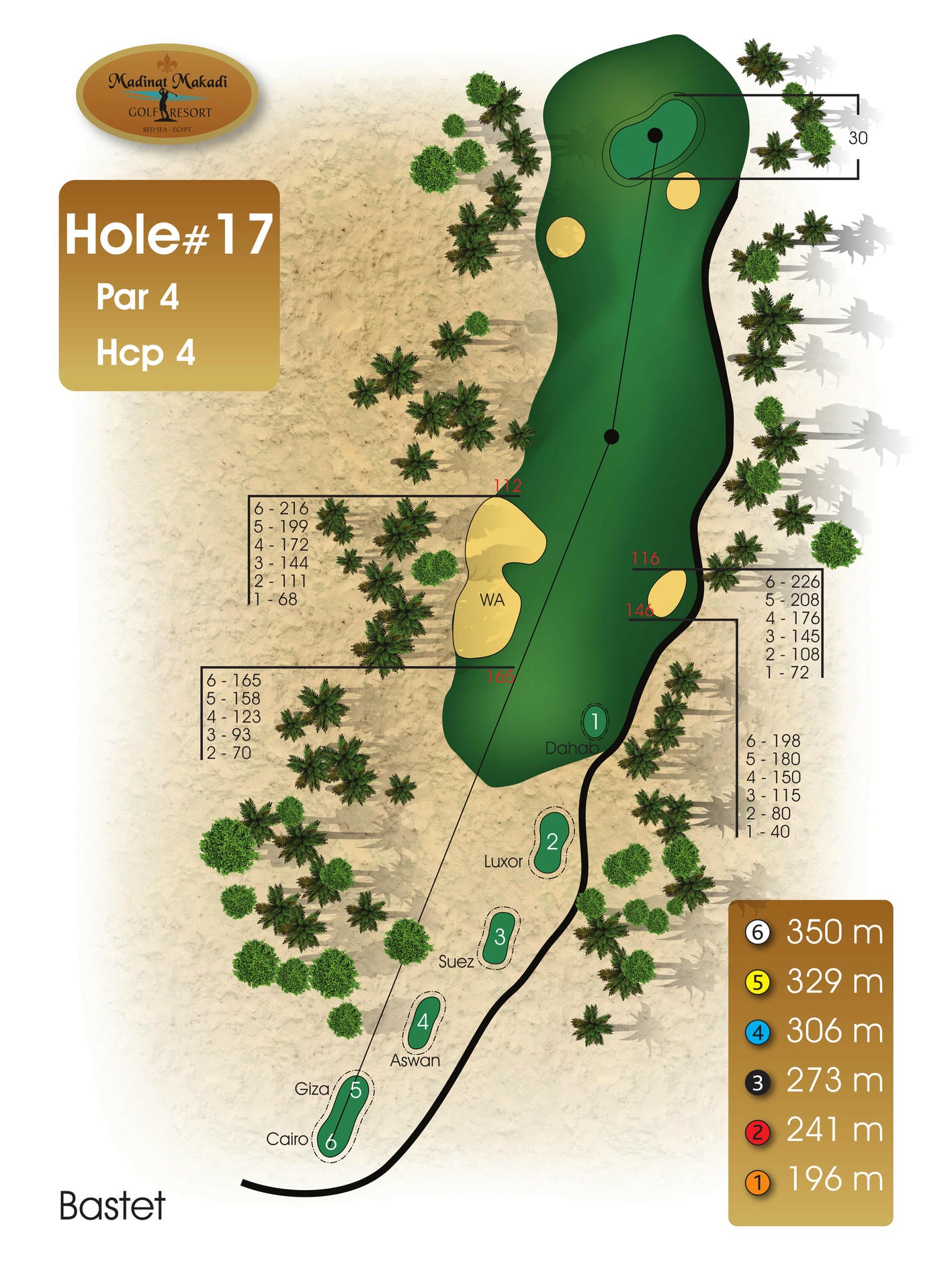
Bastet
Full Hole Map
Bastet, also called Bast, ancient Egyptian goddess worshiped in the form of a lioness and later a cat.
The daughter of Re, the sun god, Bastet was an ancient deity whose ferocious nature was ameliorated after the domestication of the cat around 1500 BC. She was native to Bubastis in the Nile River delta but also had an important cult at Memphis. In the Late and Ptolemaic periods large cemeteries of mummied cats were created at both sites, and thousands of bronze statuettes of the goddess were deposited as votive offerings.
Small gures of cats were also worn as amulets; this too was probably related to the cult of Bastet. Represented as a woman with a cat’s head, Bastet carries an ancient percussion instrument, the sistrum, in her right hand; a so-called aegis, or breastplate (in Bastet’s case, surmounted with the head of a lioness), in her left hand; and a small bag over her left arm. She wears an elaborately ornamented dress. Her cult was carried to Italy by the Romans, and traces have been found in Rome, Ostia, Nemi, and Pompeii.
Montu
Full Hole Map
A very ancient god, Montu was originally a manifestation of the scorching effect of Ra, the sun – and as such often appeared under the epithet Montu-Ra. The destructiveness of this characteristic led to him gaining characteristics of a warrior, and eventually becoming a widely revered war-god.
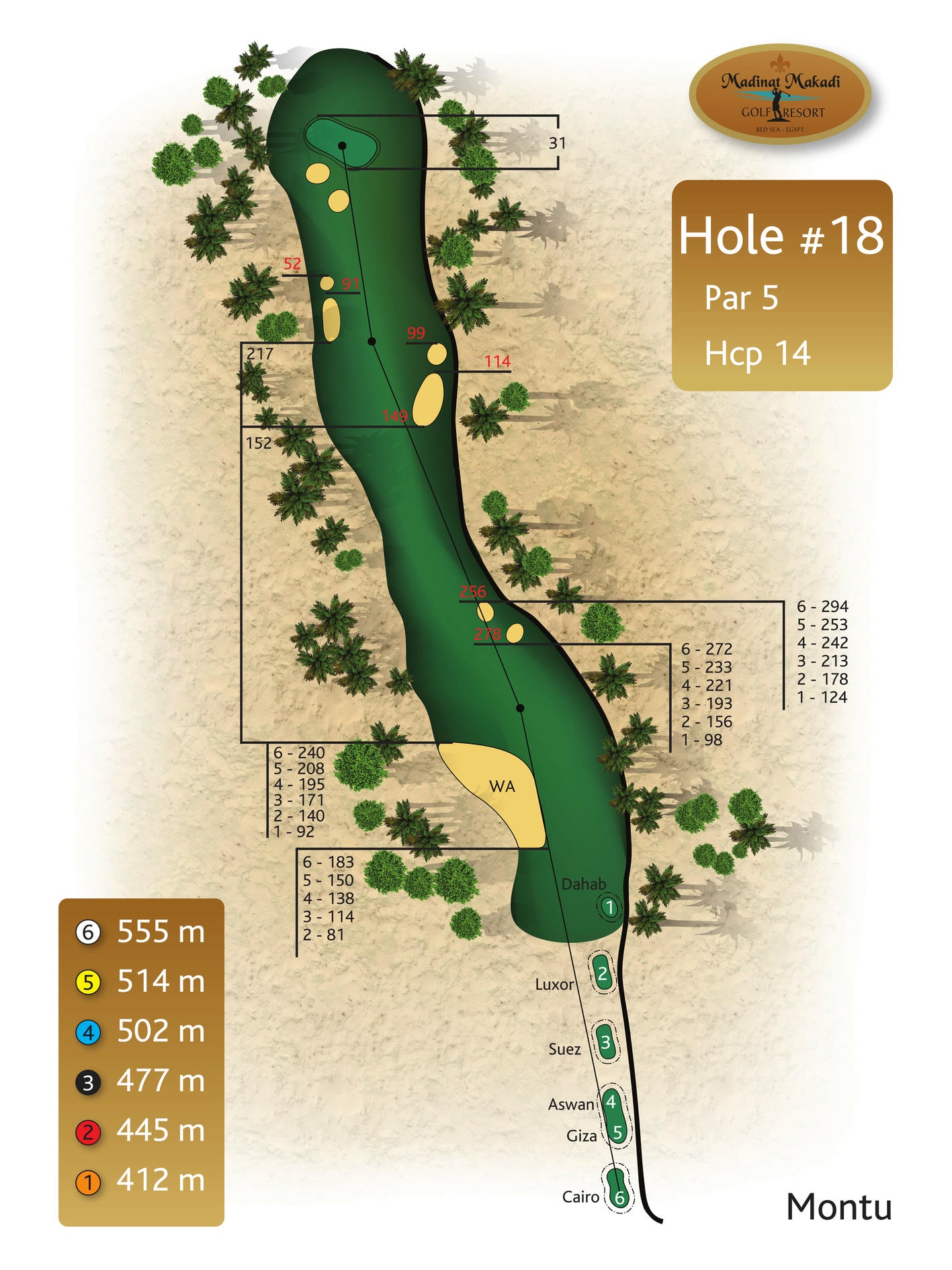
The Egyptians thought that Montu would attack the enemies of Maat (that is, of the truth, of the cosmic order) while inspiring, at the same time, glorious warlike exploits.
It is possible that Montu-Ra and Atum-Ra symbolized the two kingships, respectively, of Upper and Lower Egypt. When linked with Horus, Montu's epithet was "Horus of the Strong Arm". The Greeks associated Montu with their god of war Ares – although that did not prevent his assimilation to Apollo, probably due to the solar radiance that distinguished him.